Blog

Who Is (and Isn't) a Good Candidate for a Hair Transplant?

Who Is (and Isn't) a Good Candidate for a Hair Transplant?

Get an Offer Now

Medical of Istanbul

People with Stable Hair Loss Are Good Candidates

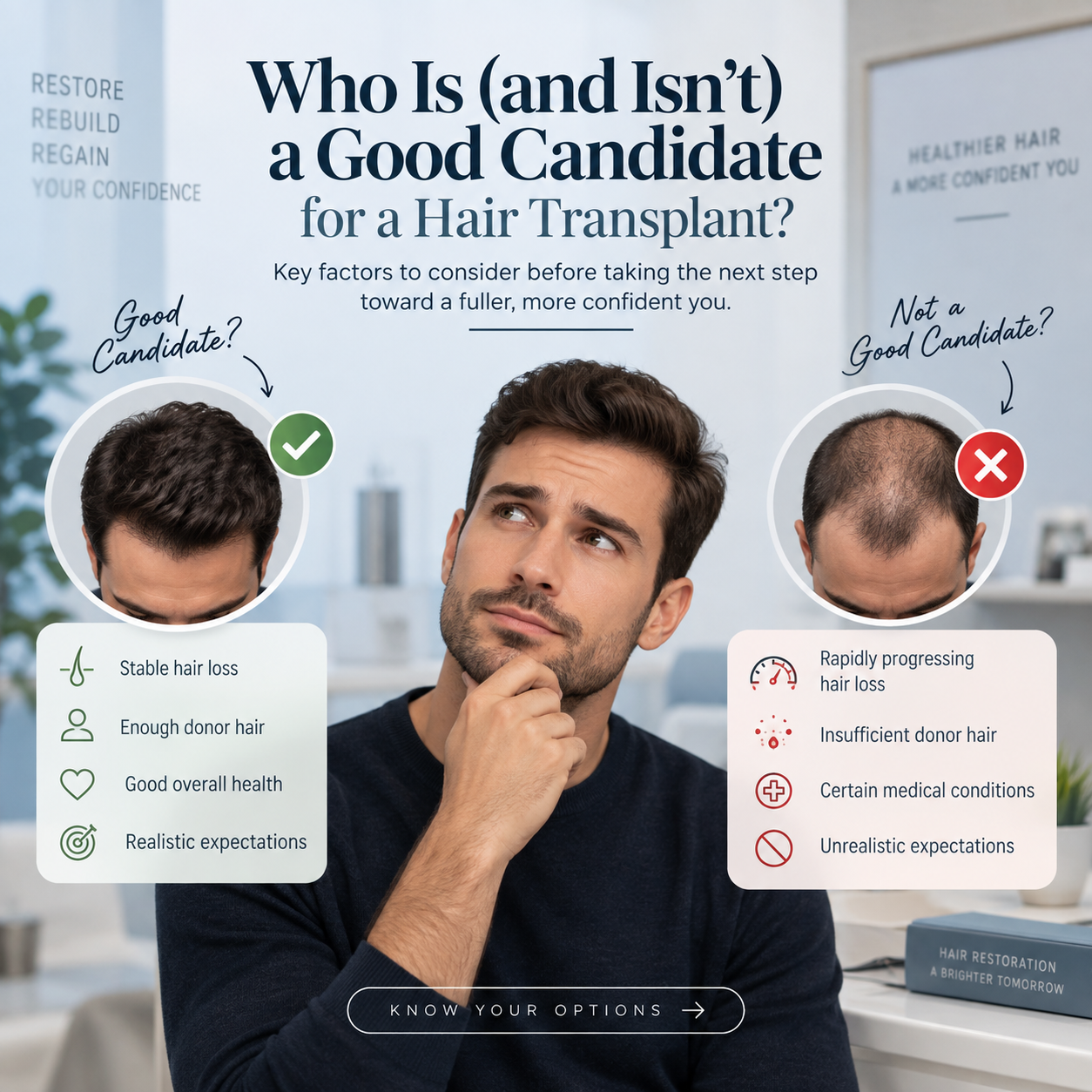
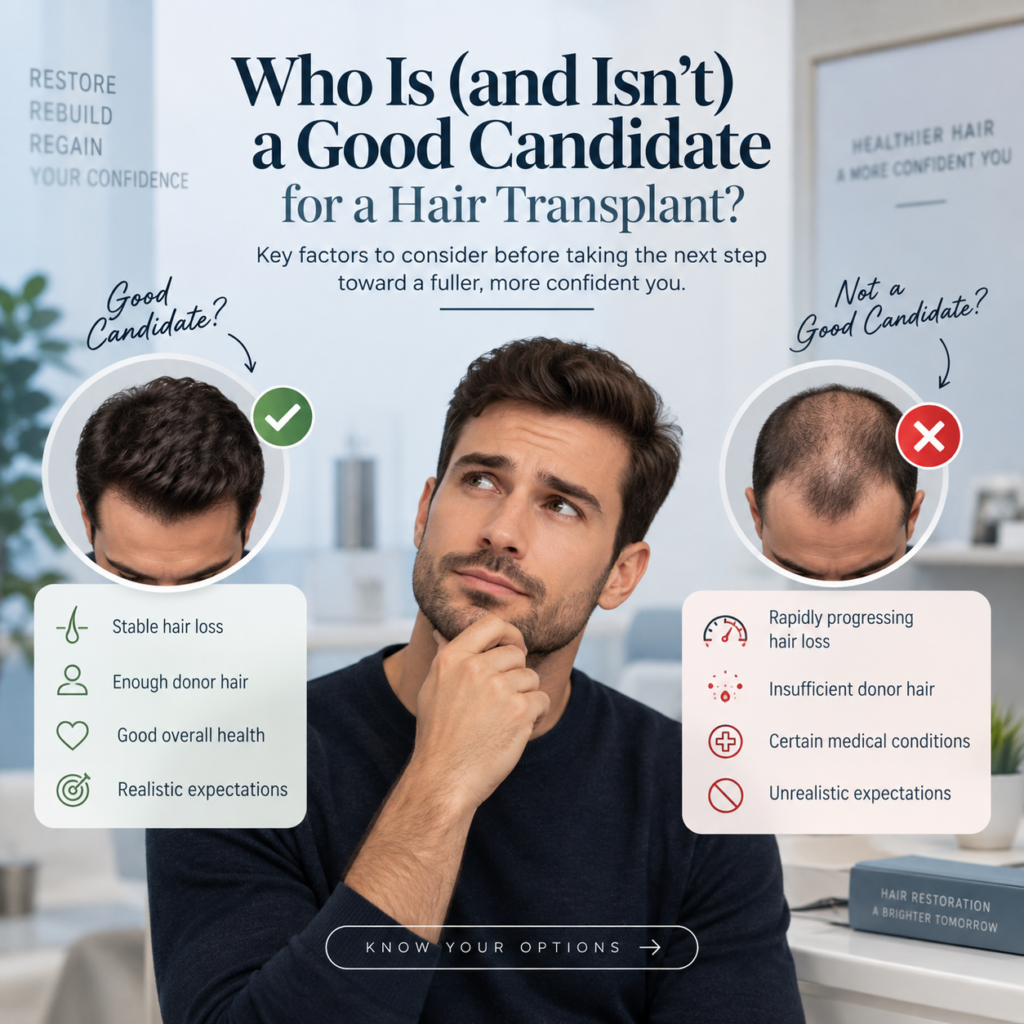
Individuals with stable hair loss are generally good candidates for a hair transplant. This means their hair loss has progressed gradually and follows a relatively predictable pattern. People experiencing male or female pattern baldness often benefit from the procedure because healthy hair follicles can be transferred from the donor area to areas affected by thinning or baldness. However, if hair loss is still progressing rapidly, a transplant may not be the best immediate solution. The surrounding natural hair may continue to fall out, creating an uneven appearance over time. A hair restoration specialist can evaluate your hair loss pattern and determine whether your condition is stable enough for a successful transplant.

Who Is (and Isn't) a Good Candidate for a Hair Transplant?

2. Having Enough Healthy Donor Hair Is Essential

A successful hair transplant depends on having sufficient healthy hair follicles in the donor area, usually located at the back and sides of the scalp. These follicles are extracted and transplanted into areas experiencing hair loss. Individuals with good donor hair density and healthy follicles are more likely to achieve satisfactory coverage and natural-looking results. However, people with extensive baldness or limited donor hair may not have enough follicles available to restore their desired hair density. During a consultation, a hair transplant surgeon will examine the donor area and determine how many grafts can be safely extracted without affecting the appearance of the remaining hair.

Exercise After Hair Transplant

Age and Hair Loss Progression Matter

Age plays an important role in determining whether someone is ready for a hair transplant. Younger individuals, particularly those in their late teens or early twenties, may still be experiencing significant changes in their hair loss pattern. Undergoing a transplant too early can lead to uneven results if natural hair continues to thin around the transplanted follicles. For this reason, surgeons may recommend waiting until hair loss becomes more predictable or considering non-surgical treatments first. However, there is no universal age requirement for hair transplantation. Older individuals can also be suitable candidates if they have sufficient donor hair, good overall health, and realistic expectations about the procedure.

Good Overall Health and a Healthy Scalp Are Important

Being in good overall health is an important factor when considering a hair transplant. Although the procedure is generally performed under local anesthesia, it still requires proper healing and recovery. Certain medical conditions, such as poorly controlled diabetes, bleeding disorders, or active scalp infections, may increase the risk of complications or affect the success of the transplant. Additionally, individuals experiencing hair loss caused by hormonal imbalances, nutritional deficiencies, or certain scalp conditions may need to address the underlying cause before considering surgery. A qualified hair restoration specialist will review your medical history, examine your scalp, and determine whether you are medically suitable for the procedure.

Realistic Expectations Lead to Greater Satisfaction

A good hair transplant candidate understands what the procedure can realistically achieve. While modern techniques can restore hair coverage and improve the appearance of a receding hairline, they cannot guarantee the same hair density you had before experiencing hair loss. The final results depend on factors such as donor hair availability, hair characteristics, and the extent of baldness. Patients should also understand that transplanted hair takes time to grow, with noticeable improvements developing gradually over several months. In some cases, additional treatments or future procedures may be necessary to maintain the desired appearance. Having realistic expectations and discussing your goals with an experienced surgeon can help you make an informed decision and feel more satisfied with your results.

Medical of Istanbul

Who Is Not a Good Candidate for a Hair Transplant?

Not everyone experiencing hair loss is suitable for hair transplantation. Individuals with insufficient donor hair, rapidly progressing hair loss, or certain active scalp conditions may not achieve satisfactory results from the procedure. Similarly, people experiencing temporary hair loss due to stress, nutritional deficiencies, hormonal changes, or medical conditions may benefit more from treating the underlying cause rather than undergoing surgery. Patients with uncontrolled health conditions or unrealistic expectations may also be advised to postpone or reconsider transplantation. However, being an unsuitable candidate does not necessarily mean that hair restoration is impossible. A professional consultation can help determine whether medical treatments, alternative hair restoration solutions, or a future transplant would be more appropriate for your individual needs.

10 Questions to Ask Your Surgeon Before a Hair Transplant

Get an Offer Now

News about Medical of Istanbul

Blog

How Many Roots Should Be Planted Per Cm2 in Hair Transplantation?