Blog

Understanding Hairline Design: How Surgeons Plan a Natural Look

Understanding Hairline Design: How Surgeons Plan a Natural Look

Get an Offer Now

Medical of Istanbul

Understanding Hairline Design: How Surgeons Plan a Natural Look

A natural-looking hairline is one of the most important elements of a successful hair transplant. While restoring hair density is a major goal of the procedure, the shape, position, and overall design of the hairline play an equally important role in achieving a realistic appearance. A well-designed hairline should complement your facial features, match your age, and blend naturally with your existing hair. Hair transplant surgeons carefully consider several factors before creating a personalized hairline that enhances your appearance while maintaining natural proportions. Understanding how surgeons plan and design a hairline can help you set realistic expectations and make informed decisions about your hair restoration journey.

Understanding Hairline Design: How Surgeons Plan a Natural Look

Analyzing Facial Features and Proportions

The first step in designing a natural-looking hairline is evaluating the patient's facial structure and proportions. Every individual has unique facial characteristics, including forehead height, face shape, eyebrow position, and overall facial symmetry. Hair transplant surgeons analyze these features to determine the most appropriate hairline position and shape. Rather than following a standard design for every patient, surgeons create a personalized hairline that complements the individual's natural appearance. A hairline positioned too low may appear unnatural, while one placed too high may not provide the desired improvement. By carefully considering facial proportions, surgeons aim to create a balanced appearance that enhances the patient's features without making the hairline look artificially constructed.

Understanding Hairline Design: How Surgeons Plan a Natural Look

Considering Age and Future Hair Loss

Age and the possibility of future hair loss are essential factors in hairline design. A hairline that looks appropriate for someone in their early twenties may not be suitable as they grow older, especially if their natural hair continues to thin. Experienced hair transplant surgeons consider the patient's current age, hair loss pattern, family history, and potential progression of hair loss when planning the procedure. Designing a slightly more conservative and age-appropriate hairline can help maintain a natural appearance over time while preserving valuable donor hair for possible future treatments. This long-term approach is particularly important for younger patients whose hair loss patterns may not yet be fully established. A carefully planned hairline should look natural not only immediately after the transplant but also as the patient ages.

Creating a Natural Hairline Shape and Density

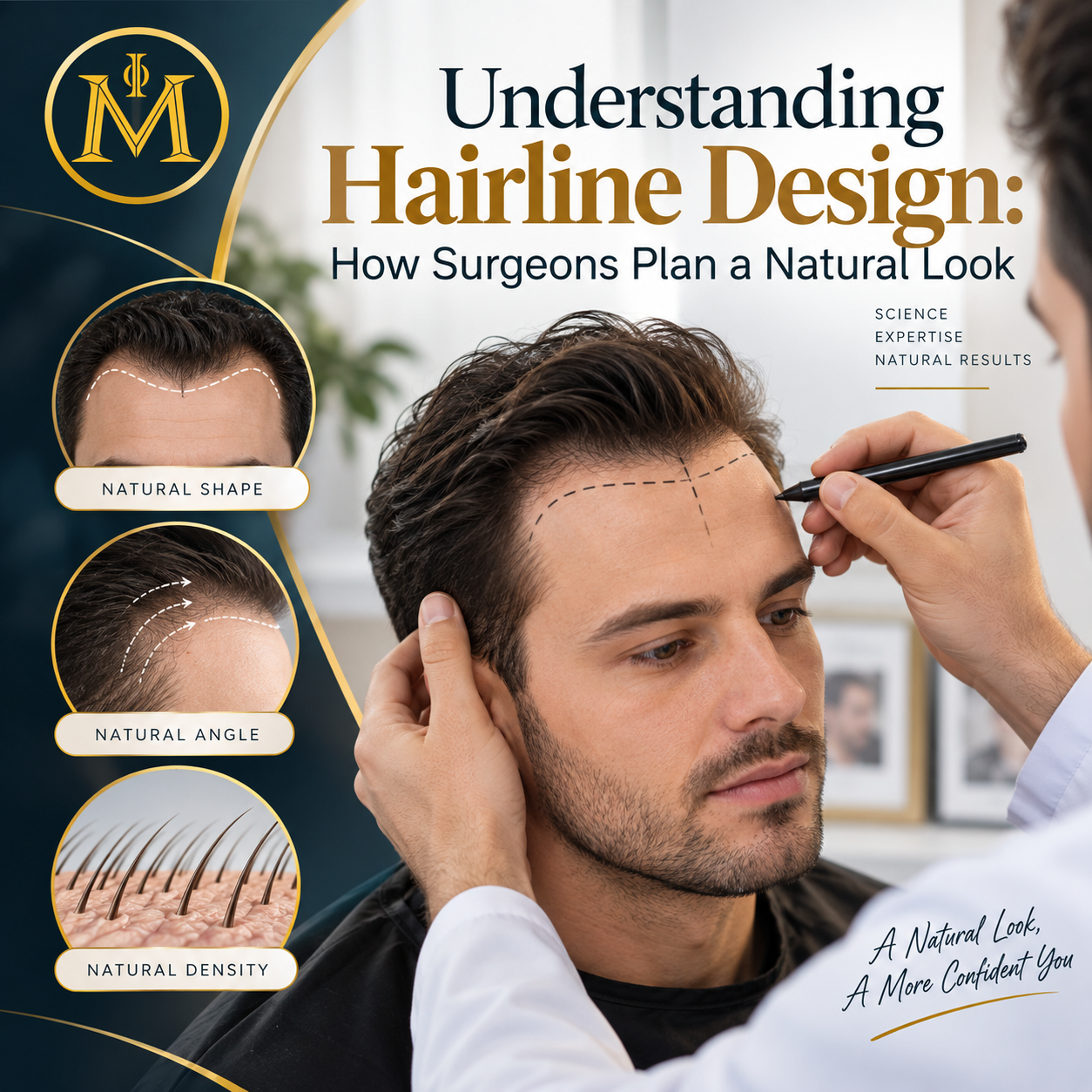
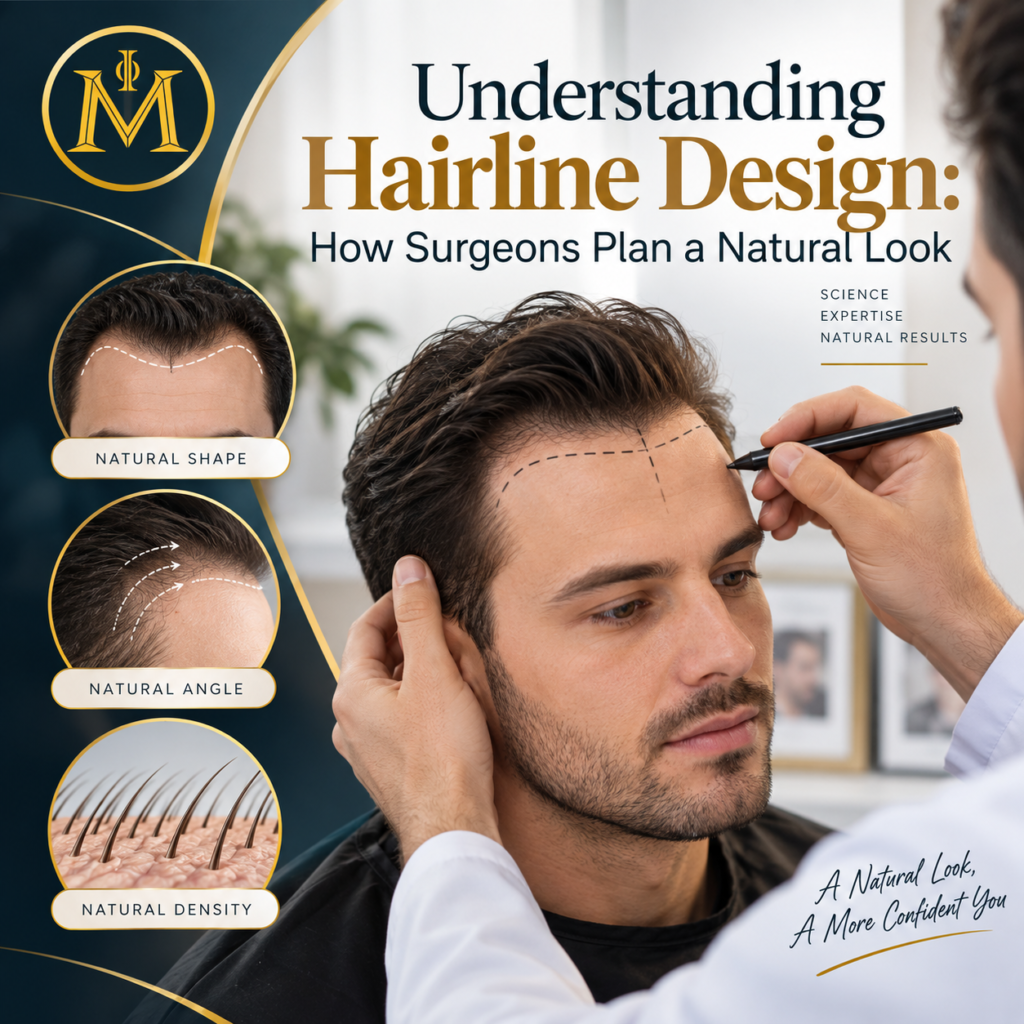
A natural hairline is rarely perfectly straight or completely symmetrical. Instead, it contains subtle irregularities, variations in density, and gradual transitions that give it a realistic appearance. During the planning process, surgeons carefully design the frontal hairline to recreate these natural characteristics. Single-hair follicular units are typically placed along the front edge to create a soft and delicate transition, while grafts containing multiple hairs may be positioned farther behind to provide additional density. The surgeon also considers the shape of the temples and the natural direction of hair growth to ensure that the transplanted hair blends seamlessly with the surrounding areas. By avoiding overly sharp lines and excessive density at the front, surgeons can create a hairline that appears natural rather than artificially drawn.

Matching Hair Direction, Angle, and Texture

Achieving a natural-looking hairline involves more than selecting the correct shape and position. The direction, angle, and texture of the transplanted hair also play a significant role in the final appearance. Natural hair grows at different angles depending on its location on the scalp, and these variations must be carefully reproduced during transplantation. Surgeons create recipient sites at appropriate angles and directions to help the transplanted hair follow the natural growth pattern of the surrounding hair. Hair thickness, curl pattern, and texture are also considered when selecting and placing grafts. For example, finer hairs are often preferred along the frontal hairline because they create a softer and more natural transition. Careful attention to these details helps prevent an unnatural appearance and allows the transplanted hair to blend more effectively with the patient's existing hair.

Medical of Istanbul

Balancing Hairline Design with Donor Hair Availability

One of the most important considerations in hairline planning is the amount of healthy donor hair available for transplantation. The donor area, usually located at the back and sides of the scalp, contains a limited number of follicles that can be safely extracted. Creating a very low or excessively dense hairline may require a large number of grafts, potentially reducing the amount of donor hair available for future procedures. Surgeons must therefore balance the patient’s desired appearance with the practical limitations of their donor hair supply. A well-planned hairline prioritizes natural proportions, appropriate density, and long-term sustainability rather than focusing solely on immediate cosmetic improvements. By carefully distributing the available grafts, surgeons can create a balanced appearance while preserving donor hair for possible future restoration needs.

Understanding Hairline Design: How Surgeons Plan a Natural Look

Get an Offer Now

News about Medical of Istanbul

Blog

How Many Roots Should Be Planted Per Cm2 in Hair Transplantation?