Blog

Hair Transplant vs. PRP Therapy: What's the Difference?

The appropriate option depends on factors such as the type and progression of hair loss, donor-area quality, age, medical history, scalp condition, expectations, and the presence of viable follicles in thinning areas. Some patients may be candidates for transplantation, others may be offered non-surgical treatments such as PRP, and in some cases PRP may be used alongside other hair-loss treatments. A professional scalp and hair assessment is important because not every form of hair loss responds to the same treatment, and identifying the underlying cause should come before deciding on a procedure.

Get an Offer Now

Medical of Istanbul

Hair Transplant vs. PRP Therapy: What's the Difference?

Hair loss can affect both men and women, and today there are several treatment options available depending on the cause and stage of hair thinning. Two commonly discussed options are hair transplantation and PRP (Platelet-Rich Plasma) therapy. Although both aim to improve the appearance and health of the hair, they work in very different ways. Understanding these differences can help patients have a more informed discussion with a qualified medical professional about which approach may suit their needs.

The appropriate option depends on factors such as the type and progression of hair loss, donor-area quality, age, medical history, scalp condition, expectations, and the presence of viable follicles in thinning areas. Some patients may be candidates for transplantation, others may be offered non-surgical treatments such as PRP, and in some cases PRP may be used alongside other hair-loss treatments. A professional scalp and hair assessment is important because not every form of hair loss responds to the same treatment, and identifying the underlying cause should come before deciding on a procedure.

What Is a Hair Transplant?

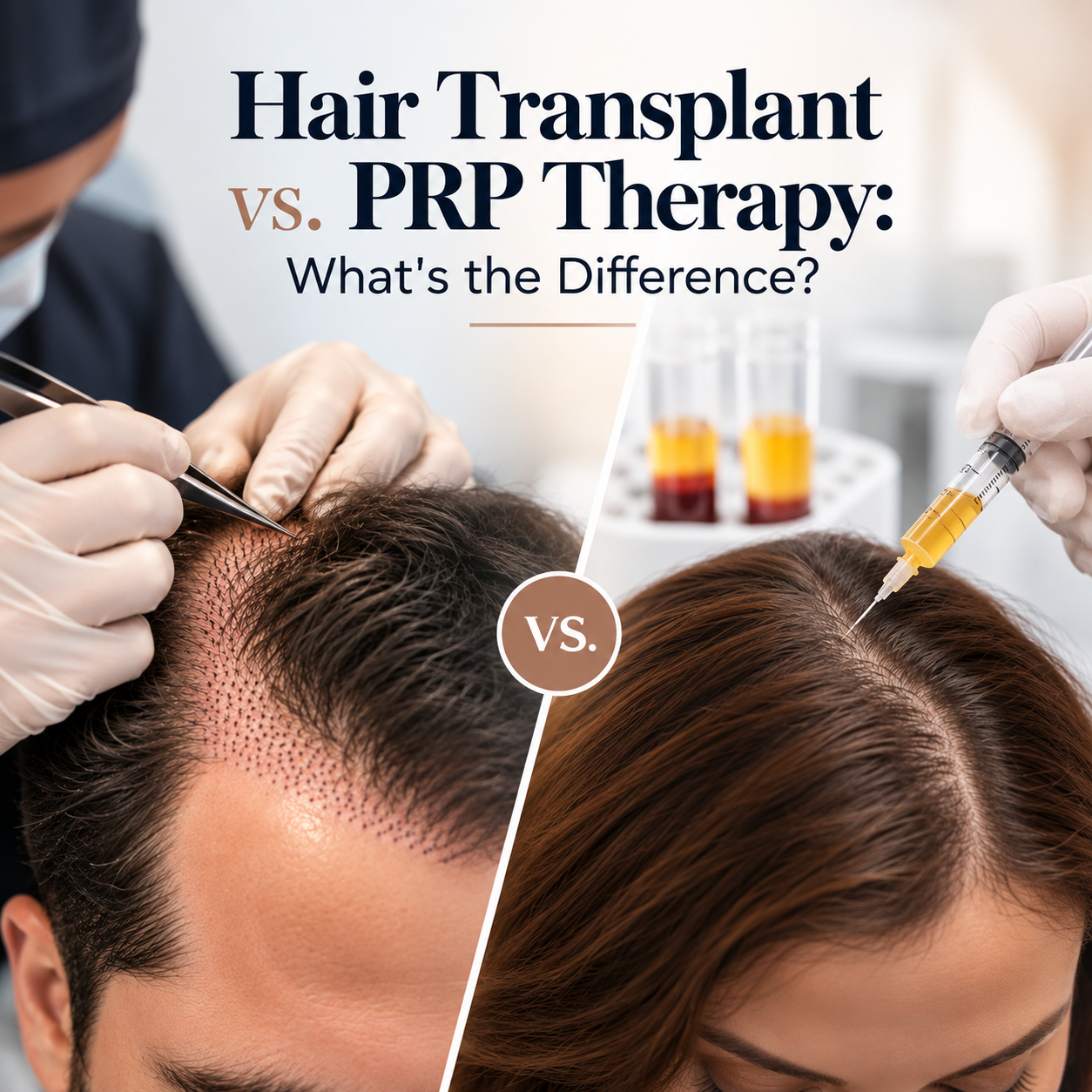
A hair transplant is a surgical procedure designed to move healthy hair follicles from a donor area, usually the back or sides of the scalp, to areas affected by thinning or baldness. Techniques such as FUE (Follicular Unit Extraction) allow individual follicular units to be harvested and carefully implanted into the desired areas. The transplanted follicles can continue producing hair after they establish themselves in their new location. Because the procedure redistributes existing hair follicles, the quality and density of the donor area are important factors when determining whether someone is a suitable candidate.

The appropriate option depends on factors such as the type and progression of hair loss, donor-area quality, age, medical history, scalp condition, expectations, and the presence of viable follicles in thinning areas. Some patients may be candidates for transplantation, others may be offered non-surgical treatments such as PRP, and in some cases PRP may be used alongside other hair-loss treatments. A professional scalp and hair assessment is important because not every form of hair loss responds to the same treatment, and identifying the underlying cause should come before deciding on a procedure.

What Is PRP Therapy?

PRP therapy is a non-surgical treatment that uses components from the patient's own blood. A small blood sample is collected and processed to concentrate platelets, creating platelet-rich plasma. The PRP is then injected into selected areas of the scalp. Platelets contain growth factors involved in tissue repair and healing, and PRP is used with the goal of supporting existing hair follicles and improving the scalp environment. Unlike a hair transplant, PRP does not move or create new hair follicles, so its potential benefits depend largely on the condition of the follicles already present.

The Main Difference Between Hair Transplant and PRP

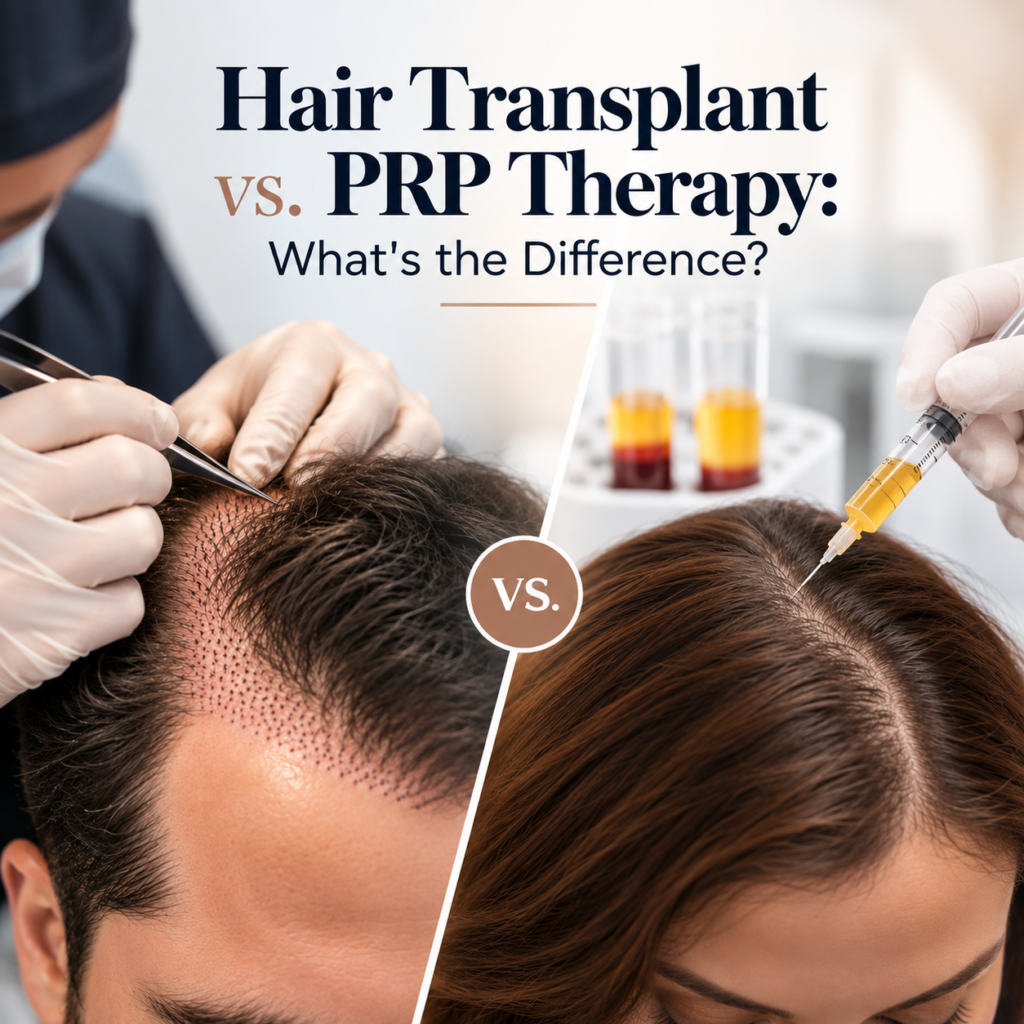
The biggest difference is the way the two treatments address hair loss. Hair transplantation physically relocates follicles to areas where hair has been lost, making it an option for certain patients with established bald or significantly thinning areas. PRP, on the other hand, is intended to support existing follicles rather than replace follicles that are no longer present. For this reason, PRP may be considered for some people experiencing thinning or early-stage hair loss, while transplantation may be considered when greater restoration of a particular area is desired and an adequate donor supply is available.

Treatment Process, Recovery, and Results

A hair transplant usually requires a longer procedure and a recovery period because it involves extracting and implanting follicles. Temporary redness, swelling, scabbing, and shedding of transplanted hairs can occur during the healing process. New hair growth develops gradually over the following months, and final results take time to become apparent. PRP sessions are generally shorter and involve less downtime, although temporary tenderness, redness, or swelling can occur at injection sites. PRP is also commonly performed as a series of sessions, with maintenance treatments sometimes recommended depending on the individual treatment plan.

Medical of Istanbul

Which Treatment Is Right for You?

The appropriate option depends on factors such as the type and progression of hair loss, donor-area quality, age, medical history, scalp condition, expectations, and the presence of viable follicles in thinning areas. Some patients may be candidates for transplantation, others may be offered non-surgical treatments such as PRP, and in some cases PRP may be used alongside other hair-loss treatments. A professional scalp and hair assessment is important because not every form of hair loss responds to the same treatment, and identifying the underlying cause should come before deciding on a procedure.

Hair Transplant vs. PRP Therapy

Get an Offer Now

News about Medical of Istanbul

Blog

How Many Roots Should Be Planted Per Cm2 in Hair Transplantation?