Blog

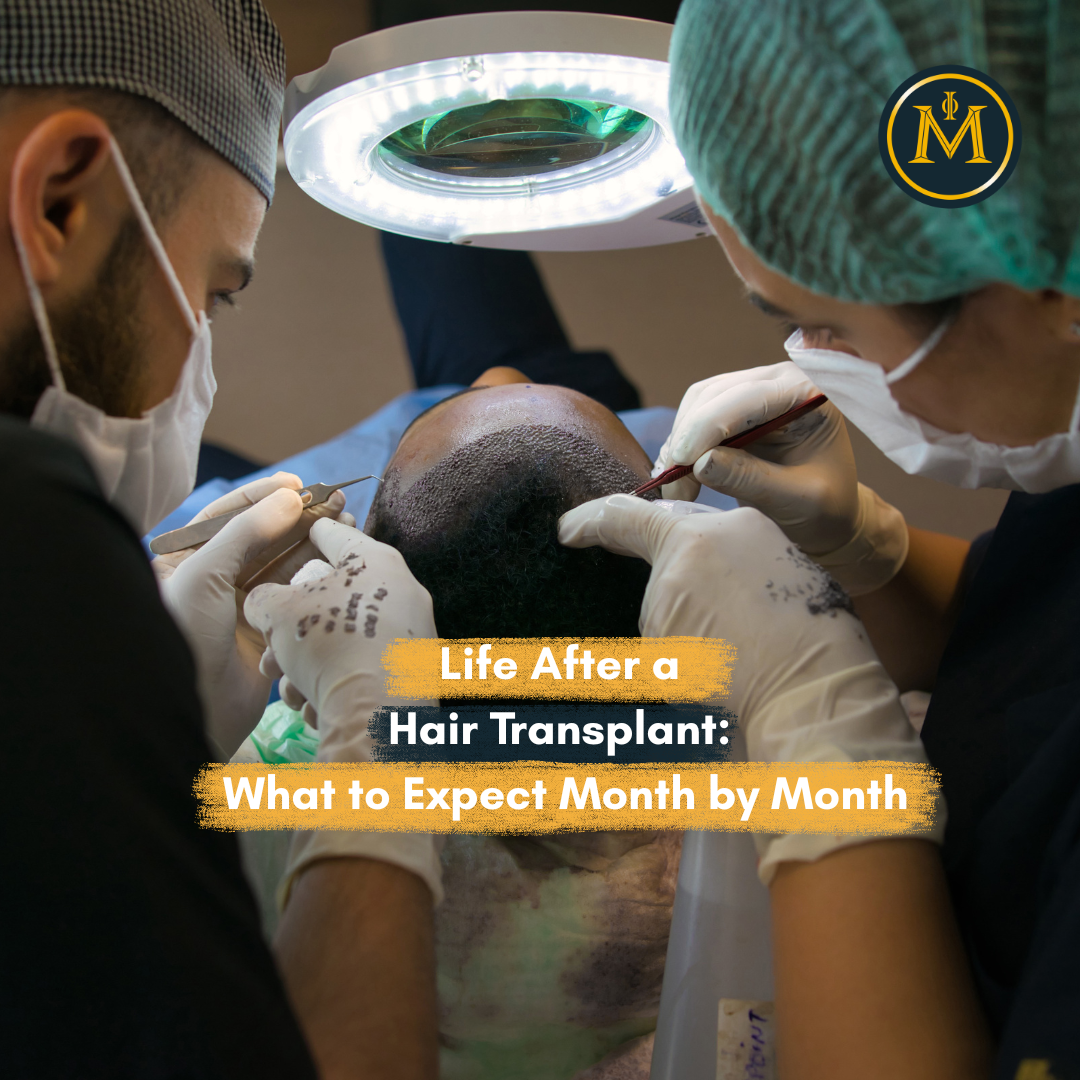
Life After a Hair Transplant: What to Expect Month by Month

Life After a Hair Transplant: What to Expect Month by Month

Get an Offer Now

Medical of Istanbul

Life After a Hair Transplant: What to Expect Month by Month

A hair transplant is not an overnight transformation but a gradual process that unfolds over roughly a year. Unlike many cosmetic procedures where results are immediately visible, hair restoration follows the natural biological rhythm of hair growth, which cannot be rushed no matter how skilled the surgeon or how advanced the technique. Knowing what happens at each stage helps patients stay patient and avoid unnecessary worry as their scalp heals and new growth takes hold. Many patients find that simply understanding the timeline in advance reduces anxiety considerably, because they can recognize each phase as a normal, expected part of the journey rather than a sign that something has gone wrong.

Life After a Hair Transplant: What to Expect Month by Month

Week One: Initial Healing

The first week brings mild redness, swelling, and tiny scabs around each graft site. These are normal signs of healing rather than complications, and they typically begin to fade noticeably within just a few days. Some patients also experience slight tightness or sensitivity across the scalp, which usually resolves on its own without any special intervention. Patients are usually advised to sleep with their head elevated and avoid touching the treated area to protect the newly placed follicles, since even gentle friction from a pillow or an unconscious scratch can dislodge a graft before it has had the chance to properly anchor itself.

Life After a Hair Transplant: What to Expect Month by Month

Weeks Two to Four: Shedding Phase

Around two to four weeks in, many patients notice the transplanted hairs starting to fall out. This can feel alarming, especially for someone who has just invested time, money, and hope into the procedure, but it is an expected and well-documented part of the natural hair cycle. The follicle itself remains intact beneath the skin and enters a resting phase before producing new, permanent growth, meaning nothing has actually been lost. It can help to think of this shedding as the scalp clearing the way for stronger, healthier hair to emerge in the months that follow, rather than as a setback.

Months Two to Three: The Waiting Period

This stretch is often the hardest psychologically, since visible progress can seem minimal or even nonexistent from the outside. Beneath the surface, however, follicles are transitioning into an active growth phase, quietly building the foundation for the results that will become visible later on. Patience during these months is essential, as rushing to judge results too early, or comparing progress to other patients whose bodies may heal at different rates, can lead to unnecessary concern and disappointment. Staying in touch with the clinical team during this period, even just for reassurance, can make the waiting feel far more manageable.

Months Four to Six: Visible Growth Begins

By the fourth month, fine new hairs typically start emerging, often thin and slightly lighter in color at first before gradually increasing in thickness, coverage, and pigmentation over the following weeks. Many patients report a noticeable boost in confidence during this stage, as the outline of their new hairline or denser coverage starts to take shape and becomes visible to friends and family, sometimes for the first time. This period often marks a turning point emotionally, since the abstract idea of "waiting for results" finally becomes something tangible that the patient can see and feel in the mirror each morning.

Medical of Istanbul

Months Nine to Twelve: Final Results

Full density and texture usually become apparent between nine and twelve months after the procedure, as the hair continues to thicken and mature into its final look. At this stage, most patients see the complete outcome of their treatment, including how the new hair blends with existing hair in terms of color, thickness, and growth direction. Regular follow-up with the clinical team, including specialists like Dr. GUNES, helps confirm that healing has progressed as expected and addresses any remaining questions, ensuring the patient leaves this final stage with full confidence in their results and a clear understanding of how to maintain them going forward.

Life After a Hair Transplant: What to Expect Month by Month

Get an Offer Now

News about Medical of Istanbul

Blog

How Many Roots Should Be Planted Per Cm2 in Hair Transplantation?